How to Choose Stone Countertops in San Diego
- Jul 2, 2025
- 3 min read
Choosing stone countertops is one of the most exciting decisions in any kitchen or bathroom remodel — and one of the most overwhelming. With dozens of materials, finishes, and price points on the market, it can be hard to know where to start. Here in San Diego, we also have some unique considerations: our coastal climate, bright natural light, and indoor-outdoor lifestyle all influence which stones perform and look best long-term.
At Vance Design Studio, we've guided clients through countertop selections on everything from full home remodels to new construction projects. Here's what we always walk them through.
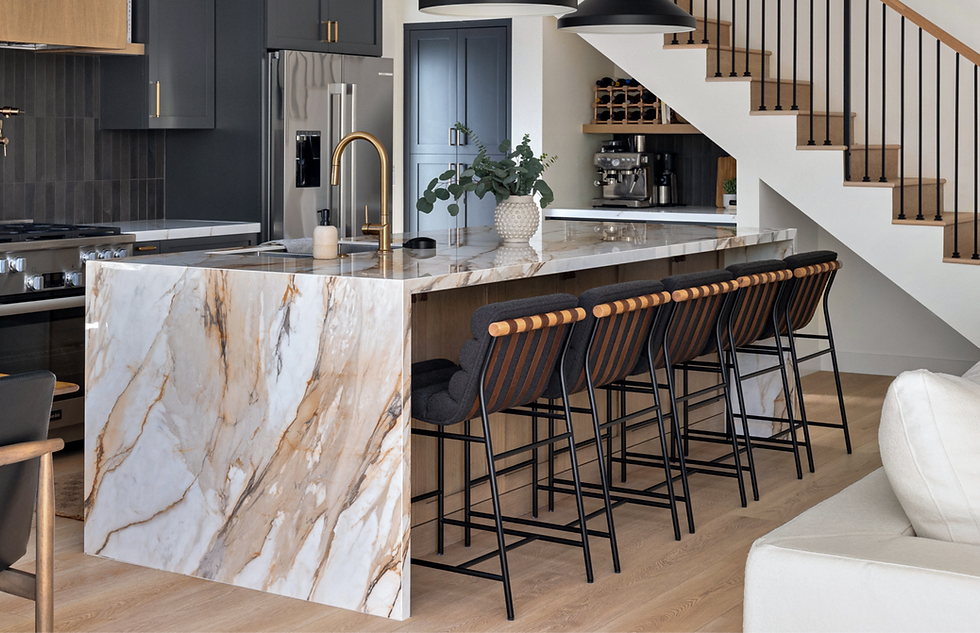
*Porcelain Countertop shown below
Understanding the Main stone Categories
Not all stone is created equal. The four materials we specify most often each have distinct personalities:
• Marble — Timeless, dramatic veining; softer and more porous, so it requires sealing and more care. Best for low-traffic bathrooms or clients who love the lived-in patina.
Porcelain countertops are highly durable, non-porous surfaces made from heated clay and minerals, offering extreme heat, stain, and scratch resistance, making them ideal for kitchens and outdoor spaces.
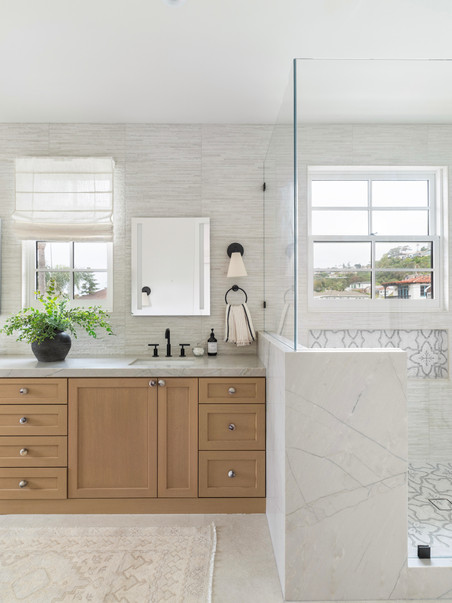
• Quartzite — Often confused with quartz, this is a natural stone that rivals marble in beauty but is significantly harder. A great choice for San Diego kitchens.
• Granite — Durable, heat-resistant, and available in a huge range of colors. Still a workhorse for high-use kitchens.
• Engineered Quartz — Man-made from crushed stone and resin. Non-porous, consistent patterning, and virtually maintenance-free. Ideal for families and rental properties.
*Natural Quartzite shown in photos below



Consider San Diego's Light & Climate
San Diego light is intense and directional. Stones with heavy movement or dark backgrounds can feel dramatic and moody in a showroom — and feel oppressive in a bright, south-facing kitchen. We always encourage clients to bring samples home and look at them throughout the day before committing.
Edge Profiles & Thickness
Two details that dramatically affect the final look: edge profile and slab thickness. A waterfall edge on a 2cm slab reads very differently than a mitered waterfall on 3cm stone. For modern or organic modern interiors — which we do a lot of here in San Diego — we tend to favor a simple eased or pencil edge on thicker slabs, or a full mitered waterfall for a sculptural, furniture-like quality.
Budget Guidance
When it comes to budget, stone countertops span a wide range depending on material and rarity. Engineered quartz is typically the most accessible entry point, with slab pricing generally running $25–$60 per square foot — and because it's manufactured, pricing is consistent and predictable across suppliers.
Granite sits in a similar range for standard varieties, with most slabs falling between $40–$80 per square foot, though exotic or heavily figured stones can push higher. Quartzite tends to command a premium over both, commonly landing between $60–$120 per square foot at the slab yard, reflecting both its natural origin and the growing demand for its marble-like beauty with greater durability.
At the top of the range is marble, where slab pricing typically starts around $80 and can climb well past $200 per square foot for rare European stones like Calacatta Oro or Statuario. The tradeoff with marble isn't just cost — it's also the ongoing maintenance and the acceptance that it will etch and patina over time, which some clients love and others don't. Understanding where each material falls on this spectrum helps set realistic expectations before you ever step into a stone yard.
Choosing countertops is about more than material — it's about how a surface will live in your home for decades. If you're planning a kitchen or bath remodel in San Diego, we'd love to help you navigate it. Reach out to Vance Design to schedule a consultation here.
Comments